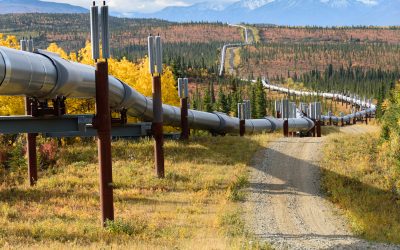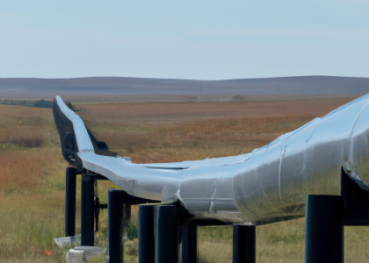
Selling Alberta's oil for $30 less than the benchmark price costs the Canadian economy about $27 billion a year. That's around $75 million a day. The Frontier Centre's pipeline price gap counter shows the loss to the Canadian economy so far this year, based on these figures. The lack of pipeline capacity in North America is a serious problem for the Canadian economy, and needs to be urgently addressed”, says Nick Lazic, Vice President of Exploration with Saskatchewan-based Spectrum Resource Group.
|
|
Manitoba Hydro is preparing for a $33 billion dollar expansion of its infrastructure. But given a record of cost overruns – such as the Wuskwatim Dam, which came in $900 million over budget – the huge program may well end up costing much more than that. Things were very different when the program was put in place just five years ago. Natural gas prices were high, and the Canadian dollar was low. (~2 min.)
Join us weekly across the prairies for our hard hitting policy commentary broadcast across the Goldenwest Radio Network and more - Click here for a list of 17 stations and broadcast times.
|
~15 min
|
June 14, 2013 —
Restructuring Saskatchewan’s BusTransportation Subsidy Policy
|
~2 min
|
June 14, 2013 —
A Costly Gamble with Manitoba’s Future
|
~2 min
|
June 7, 2013 —
Historic Bill Aims to Replace Outdated Indian Act
|
~60 min
|
June 7, 2013 —
Dam-nation: Rolling the Dice on Manitoba’s Future (Graham Lane)
|
~1 min
|
June 4, 2013 —
Good Governance is Key (Chief David Crate)
|
~2 min
|
May 31, 2013 —
Steep Tax Hikes For High Income Earners Do More Harm than Good
|
~2 min
|
May 24, 2013 —
Canada's Organic Food System is a Nightmare
|
~5 min
|
May 24, 2013 —
No Alcohol Allowed (Alberta Primetime)
|
~2 min
|
May 17, 2013 —
Improving Access to the Newest Medicines
|
~55 min
|
May 17, 2013 —
Schizophrenic Government Climate/Energy Policies (CFRA radio, Ottawa)
|
~88 min
|
May 16, 2013 —
To Heat or Eat: Europe's Climate Policy Fiasco (Benny Peiser)
|
~2 min
|
May 10, 2013 —
Government Set to Move on First Nations Equality Law
|
|
Latest Publications
— June 19, 2013
A lack of pipeline capacity in North America is costing the Canadian economy billions of dollars each year. In order to draw attention to the significant loss of economic opportunity in the prairies, the Frontier Centre for Public Policy is launching a digital counter on its website to add up the lost dollars.
— June 19, 2013
Rather than focus on creating another First Nations political organization, native communities need to resolve existing issues within the Assembly of First Nations.
— June 18, 2013
Frontier's Conversation with Manny Jules, head of the First Nations Tax Commission and former Chief of B.C.'s Kamloops Indian Band on good governance and property rights on First Nations.
— June 18, 2013
Let me stipulate that I think Toronto’s Rob Ford is a terrible mayor. In fact, while I might not go so far as Richard Florida, who labeled Ford “the worst mayor in the modern history of cities, an avatar for all that is small-bore and destructive of the urban fabric, and the most anti-urban mayor ever to preside over a big city,” I’m willing to say he’s probably in the running for the title.
— June 14, 2013
In Manitoba, the provincially owned electrical utility is planning a massive expansion of its hydroelectric operations, even though its profits from the sale of electric power have fallen dramatically, to the point that Manitoba ratepayers are actually subsidizing the sale of cheap power into the U.S. grid.
— June 13, 2013
The federal government is considering mandatory minimum sentences for the sale of contraband tobacco in an attempt to crack down on black market activity. However, federal taxes are driving Canadians to the black market in the first place. Rather than ramping up policing efforts and costs, the government should reduce taxes to reduce demand for black market tobacco.
|
|
|
|
RE: Make School Day Work Smarter, Not Longer
— December 17, 2012
99.5% of the time I agree with the Frontier's views but on this one I have to provide a different viewpoint. The existing school system at the elementary level is modeled on the same system that existed in the 60's, 50's, 40's, etc. Children are present in school from 9:00am to 3:30pm. Let's take the average family of the 21st century whereby both Mom and Dad are both present in the workforce (unlike the 60's, 50's, etc. where Mom's were "stay at home"). The standard workday is 8:00 to 4:00 or 9:00 to 5:00. Either parent is now forced to either rearrange their work schedule in order to pick up their child(ren) or find suitable after school daycare (for children under the age of 12).
Now take this situation one step further and apply it to a single parent family that is living at or below a middle income level. The parent gets two weeks vacation per year. The average number of Professional Development days teachers receive are a minimum of 1 per month not including early dismissals. The single parent must arrange and pay for an after school sitter or daycare when their child is released from school at 3:30pm. The cost of this to the parent is significant in terms of percentage of their annualized income. Factor in that the parent must arrange for a sitter 10 days a year not including the two weeks at Xmas and the summer and one can see the system is fine if we were living in 1952 but doesn not work for 2012.
I would argue that the average school day should not only coincide with the average work day but should be 8:30 to 5:30 to allow parents to fullfill their career/job obligations and help contribute to our economy by allowing for more work time and more disposable income directed to things the family needs vs going to after school daycare.
Email - Winnipeg, Mb
RE: Quebec Shouldn’t be Given its Gun Registry Data
— September 21, 2012
This column was an eye-opener. Not so much for Navarro-Genie's gun registry argument, but for the examples he gave of the intrusion of the Quebec government in people's lives.
I was aware of the requirement of women to maintain their maiden names upon marriage, but had forgotten, or was un-aware that, among other restrictions, all housing leases must expire at the same time, and that state permission must be sought in naming a child, or to send one to a non-French school. Top it off with the edict that all outdoor commercial signs must be exclusively in French and you have, I believe, the most totalitarian, intrusive regime in Canada.
As with all of their entrenched information-gathering systems already in place, the gun registry in-formation is merely another nail in the coffin for individual freedom in that sad imitation of a democracy.
Eric Hindson, Calgary
RE: Quebec Shouldn’t be Given its Gun Registry Data
— September 21, 2012
Question: Why do you care if Quebec keeps registering long guns, you are in Calgary, does it really affect you? The majority of Canadian's wanted to keep the registry.
Honestly, I'd be perfectly content if Alberta was the one to leave the country. You can take Stephen Hitler with you, and continue to ruin your local environment with all the tar sands production and those ugly tailing ponds. Email from William Groombridge
RE: Does PM Want to End Native Poverty?
— August 25, 2005
Dear Mr. Sandberg: I have to say, kudos to you for being so honest regarding the new ideas by the Liberals to pour money down the drain.
I used to work as a probation officer and I saw first hand how money is abused. Your right, the money gets to the reserves and the leaders spend it on themselves, their family and friends and everyone else suffers. It made me sick to my stomach and I was so glad when Robert Nault was trying to change things... then it all collapsed and my hope for accountability was gone because I agree with you 100%, the leaders are the reason their communities are poor.
It just made me ill.... and if someone was doing their job i.e. keeping in budget and had money in their account, the leaders help themselves to it without asking.
I am currently at another reserve and its very similar, the Chief is always gone (in the cities, hanging at the fancy restraints, casinos, bars) while the community is left to deal with whatever misfortunate is going on i.e. sexual assaults, spousal assaults (all deemed as every day regular occurrences and don't warrant the chiefs presence) he may show up for a suicide if its a friend or relative.
I have worked in the correctional system, the court system and its all the same, its everybody else's fault, never those that are actually accountable "the leaders of their communities", we cannot heal other peoples back yards, they have to do it themselves and your right, money is not the answer, unless it is used for its intent over a long period of time.
Anyway, I am always angry when I hear so much about how the white man does this and that and its their fault because what I have seen, is this: The white man isn't around to abuse anymore, natives are harming each other, they are full of hate, jealousy and negativity because their leaders aren't doing what they are supposed to be doing, taking care of their issues and their people.
So, what can we do about it? E-mail from Manitoba
RE: The True Cost of Fixing Natural Gas Prices
— November 18, 2005
I just about fell out of my chair when I saw this the other day. Hydro is nothing more then a political tool being used by the government of the day. SELL IT before they completely destroy it! If I was Bob Brennan I would resign over this. - E-mail from Winnipeg
RE: Lots of rain and cool temperatures seems to fly in the face of the global warming proponents. What is with the weather on the Canadian prairies? E-mail from Starbuck, Manitoba
— June 29, 2005
We asked our climate expert Dr. Tim Ball to respond:
Despite all the global warming alarmism we are entering a period of cooling on the Canadian prairies. This is normal.
Global temperatures have cooled since the peak caused by El Nino in 1998 despite continuing increases in atmospheric CO2. Winnipeg summer average temperature last year equaled the long-term average for Churchill. This was because the Polar Front that separates cool polar air from warm subtropical air was about 800 km south of its long-term summer position. Heavy precipitation occurs along the Front so it was also very wet. The pattern continues this year. From 2000 to 2003 the Prairies experienced a drought cycle that is part of the normal 22-year pattern. We have now entered the normal wet cycle and this will last until about 2020.
RE: Province Should Pay School Tab
— March 14, 2005
New Brunswick brought school boards back a few years ago. Why are you claiming otherwise in your recent column on school taxes? E-mail from M. Zimmer, Winnipeg.
We aren't. New Brunswick did abolish its boards, and was able to cut costs substantially over the next few years. The new districts, which replaced weak parent-teacher councils, are administrative sub-levels without the power to levy school taxes or to diverge in any important way from provincial control of budgets.
RE: Residential Schools Propaganda?
— August 8, 2008
I always enjoy getting updates from Frontier and reading what you have to say. I just wanted to comment on the residential school article about the fact there was also good that went on. My mother-in-law who had only positive experiences at her school and has nothing ill to say about it received a cheque last year for 35,000 no questions asked and was told there would be more. More -- E-mail from Pauline, Ontario
|
Public Perceptions of Modern Agriculture
Both cities have serious poverty problems, but where would you rather be if you were poor? Milk costs $2.23 a gallon in Toronto versus $8.40 in Hong Kong and $7.44 in Tokyo. Overall, apart from the United States, Canadians pay the lowest food prices in the world - all because of modern agriculture and efficient distribution.
Alberta Carbon Capture Opportunity Cost Calculator
Effective public policy is about the smart use of scarce resources. Rushed schemes based on questionable computer models, like carbon capture, come at real costs of, for example, fewer needed public housing units, other spending that more effectively benefits our environment like better water and sewer systems, more spending on education or healthcare, and lower taxes.
How Mainstreaming Can Hurt Disabled And Regular Students
Obviously, many academically weak students recognize their own difficulties when they are in classrooms where most of the other students are ahead of them. And strong students are sometimes prevented from progressing at a pace that challenges them because their right to an appropriate education is considered, even by some educators, to be less important because they are gifted and it is assumed that they can cope on their own. Moreover, excellent teachers experience considerable frustration and despair with the wide variability of knowledge, skills, and proficiencies of the students in their classrooms.
Airing Out the Wet Blanket
Many claim that a dual market in wheat and barley is a metaphysical impossibility, that it just won’t work, and would be the end of the CWB. They should look at the latest data coming out of the Ontario Wheat Board, whose farmers have been operating in a market-choice environment since 2003. The former single-desk seller has made a remarkable comeback, though it never really went away. For the 2005-06 crop year, it was back up to handling a third of the total wheat crop, and is expected to make further gains this year.
Canada Needs to Decentralize
The intrusion into provincial jurisdictions, especially in western Canada, has reached epidemic proportions. In the area of environmental protection, the federal Department of Fisheries and Oceans has used its sweeping powers under the Federal Fisheries Act to move onto the Prairies and insinuate itself into all facets of rural economic development.. It has become the bane of every local government in Manitoba.
A High-speed Train Collision with Fiscal Sense
There are plenty of reasons why high speed rail doesn’t make sense in Alberta: the low population density in the Edmonton-Calgary corridor (with 2.2 million people compared to 60-million in the Tokyo-Osaka region); also, given worldwide demographic projections, Alberta will likely never have the population crunch one sees in China or India where passenger rail makes sense.
Media Release - Case Studies in Pricing-Based Carbon Controls
We further conclude that carbon pricing plans have a much greater likelihood of earning popular support if they are truly revenue neutral, and include transparent “revenue recycling” provisions that automatically return any revenue from carbon pricing back into the economy. Political opposition to carbon prices often coalesces around the notion that such policies are “tax grabs,” designed to increase government revenues. Examples include the grassroots pressure that prompted the withdrawal of several American states from the WCI and RGGI, as well as the opposition that developed to the Liberal Party of Canada’s proposed Green Shift, which was successfully framed by Conservatives as a ‘tax on everything.
Tequila in Paradise
Blue laws have unwanted consequences. They create an allure and attraction for consuming alcohol which advertising agencies effectively exploit. More importantly, they absolve individuals from making informed choices and taking responsibility for safe and healthy alcohol consumption. They also distort investment and move it into applications with no sustainable market value. They protect bastions of privilege unsuited to a modern consumer culture.
Adapting to New Realities
Traditional farm subsidies worked in an opposite manner. They discouraged value-added activity, and their gradual phase-out has brought impressive results. Industries like potato processing, oat milling, hog processing and forage exports are booming and keep many rural families solvent by providing off-farm jobs.
|
|
|

Upcoming Events
Dams & Transmission Lines: Are There Responsible Alternatives? with Ed Schreyer, Former Governor General of Canada & Premier of Manitoba
June 25, 2013 — Winnipeg
Future Solutions for Retirement Security & Pensions with The Honourable Ted Menzies
June 27, 2013 — Calgary
Upcoming FCPP AppearancesWatch for more appearances soon - to book a Frontier speaker for your community club or organization contact newideas@fcpp.org
Thu June 20, 2013

| Symbol | Current Price |
|---|
| Canadian $ | 0.9638
| | US $ | 1.0375
| | S&P/TSX | 12268.29
| | Dow Jones | 13147.18 | | NASDAQ | 3423.555
| | Oil | 94.65
| | Uranium | 40.10
| | Potash | 40.93
|
|